
SPACE
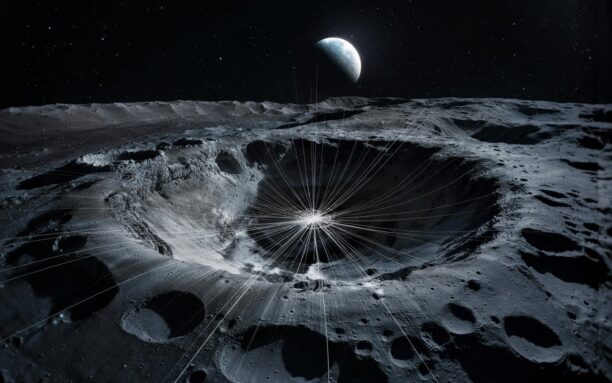
The Chang’e-6 mission returned about 2 kg of soil from the South Pole-Aitken (SPA) Basin, the Moon’s largest crater, spanning 2,500 km, providing new insights into the geology of the lunar far side. Research published in “Nature” explains the asymmetry between the Moon’s sides, where the far side’s crust is thicker and its terrain more […]

Astronomers have proposed that the Milky Way resides in a massive cosmic void—a region with 20% lower matter density than average, spanning a radius of about one billion light-years. This hypothesis, presented at NAM 2025, explains the “Hubble tension”—a discrepancy in measurements of the universe’s expansion rate, suggesting that the local void accelerates galaxy motion […
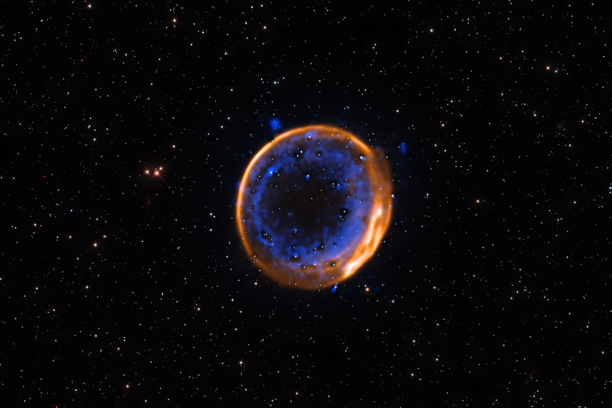
Astronomers using the European Southern Observatory’s Very Large Telescope (VLT) have obtained the first visual evidence of a double detonation in the supernova remnant SNR 0509-67.5, located in the Large Magellanic Cloud. The study, published in *Nature Astronomy*, reveals that some white dwarfs explode twice: first, the helium layer detonates, then the carbon-oxygen core.
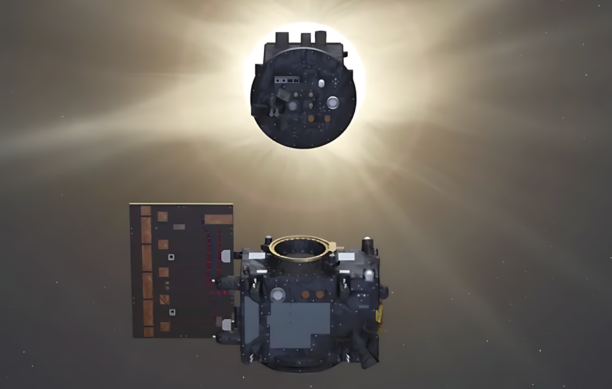
The European Space Agency’s Proba-3 mission has pulled off a historic first: an artificial solar eclipse. Two satellites, dubbed the “Occulter” and the “Coronagraph,” worked in perfect sync on orbit to cast a shadow about 8 centimeters wide, mimicking a total eclipse. This allowed scientists to observe the Sun’s corona—usually visible only during natural eclipses—without […
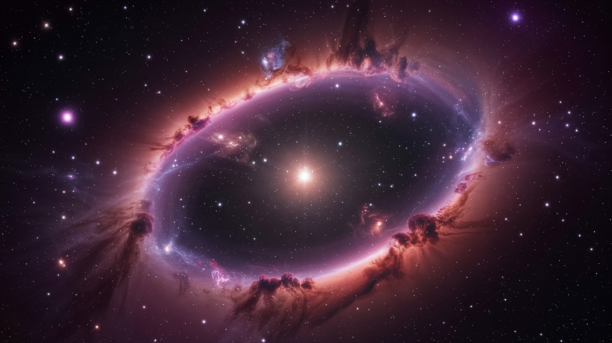
About a century ago, astronomers discovered that the universe isn’t static, as Einstein originally assumed, but is instead expanding — galaxies are moving away from one another. This led to a fundamental question: if space is expanding, where is its center? However, modern physics shows that this very question is flawed — in an expanding […]
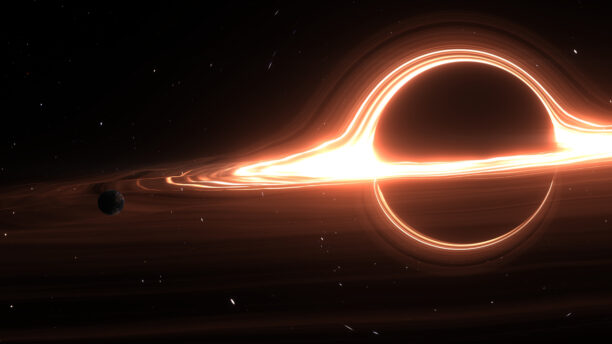
Scientists from Johns Hopkins University have proposed using supermassive black holes as natural analogues of supercolliders to search for dark matter and other fundamental particles. According to the authors of a study published in Physical Review Letters, these cosmic giants could offer a powerful and cost-effective alternative to building particle