
SCIENCE

Scientists in Germany have, for the first time, recorded the vibration of atoms in a 2-iodopyridine molecule just before its collapse under the impact of an X-ray laser. Using the European XFEL in Hamburg, they employed ultrashort X-ray pulses that stripped electrons, turning the molecule into a highly charged system that rapidly disintegrated. Analysis of […
String theory, which aims to unify the Standard Model and general relativity, faces criticism due to a lack of experimental evidence. The Standard Model describes electromagnetism, strong and weak nuclear interactions, but excludes gravity, which general relativity explains but is incompatible with quantum mechanics.

Mathematician Lorenzo Gavassino from Vanderbilt University has proposed a theory that time travel along closed timelike curves (CTCs) leaves no memories or evidence due to fundamental laws of physics. The second law of thermodynamics requires that a system’s entropy return to its original state, making all processes reversible. This means a traveler cannot retain memories […
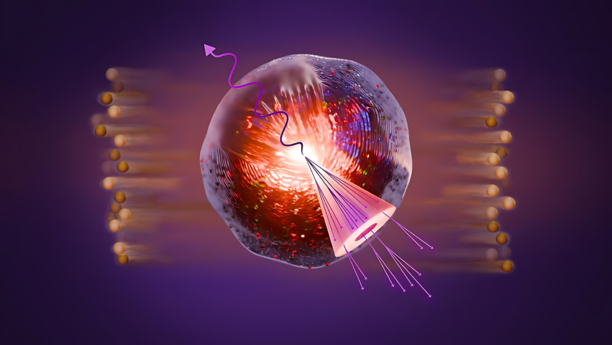
Physicists at Brookhaven National Laboratory have made significant progress in studying quark-gluon plasma (QGP)—an extremely hot and dense state of matter that existed during the first microseconds after the Big Bang. Using the Relativistic Heavy Ion Collider (RHIC), they investigated how high-energy particle jets interact with this exotic medium. The STAR collaboration’
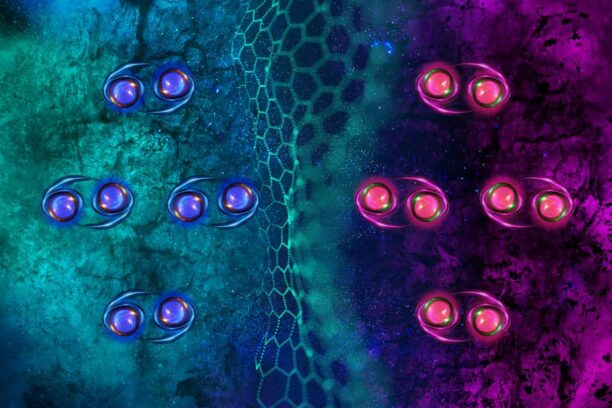
Physicists at MIT have discovered a new type of material—a chiral superconductor—that simultaneously exhibits superconductivity and intrinsic magnetism. This breakthrough was made in rhombohedral graphene, a special multilayer structure of graphite, when cooled to around 300 millikelvins. Remarkably, the material maintains superconductivity even in

Modern research is challenging the traditional view of time as a linear, one-way process. The concept of retrocausality—the idea that future events can influence the past—is gaining traction, thanks to the work of scientists like Julia Mossbridge. This hypothesis suggests that cause-and-effect relationships may be bidirectional, echoing interpretations