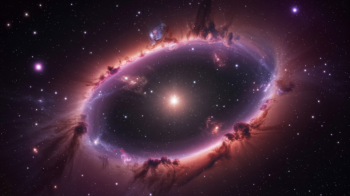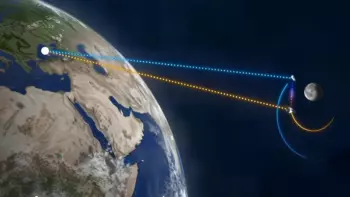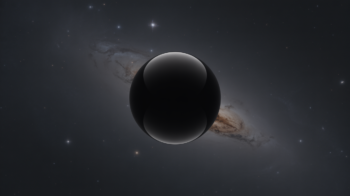

Astronomers have proposed that the Milky Way resides in a massive cosmic void—a region with 20% lower matter density than average, spanning a radius of about one billion light-years. This hypothesis, presented at NAM 2025, explains the “Hubble tension”—a discrepancy in measurements of the universe’s expansion rate, suggesting that the local void accelerates galaxy motion due to the gravitational pull of denser surrounding regions.
The “Hubble tension” stems from conflicts between measurements of the Hubble constant: data from nearby galaxies and supernovae indicate faster expansion than predicted by the standard cosmological model based on cosmic microwave background radiation. The local void could create an illusion of accelerated expansion, as galaxies within it move faster due to external gravitational attraction.
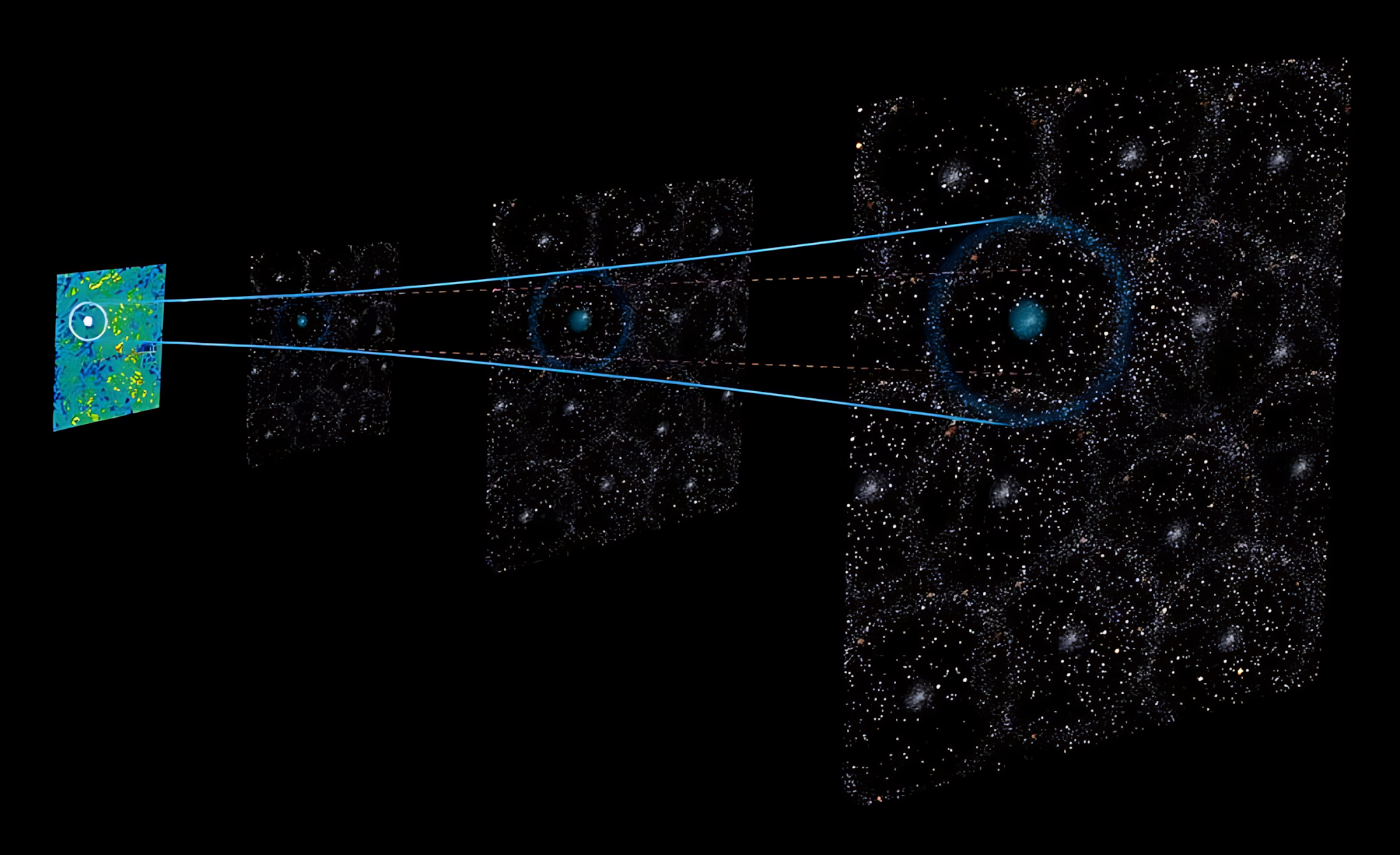
Evidence for the hypothesis comes from baryon acoustic oscillations (BAO)—“echoes” of the Big Bang captured in the distribution of galaxies. BAO distortions confirm the void’s influence on redshift, pointing to local anomalies. Observations also show reduced galaxy density in our region, contradicting the expected uniformity of the universe.
To test the theory, scientists plan to use “cosmic chronometers”—spectra from old galaxies that allow independent assessment of the expansion rate. If confirmed, this hypothesis could resolve the “Hubble tension” and reshape our understanding of the universe’s large-scale structure, highlighting the uniqueness of our position in a cosmic “bubble.”
#space #science #educational #technology