
TECHNOLOGY

Engineers at Columbia University, backed by DARPA, have developed a “robotic metabolism” technology that enables robots to use parts from other machines for self-repair, growth, and evolution. This marks a significant step toward creating autonomous robotic ecosystems, where machines not only process information but can physically sustain themselves without human intervention.
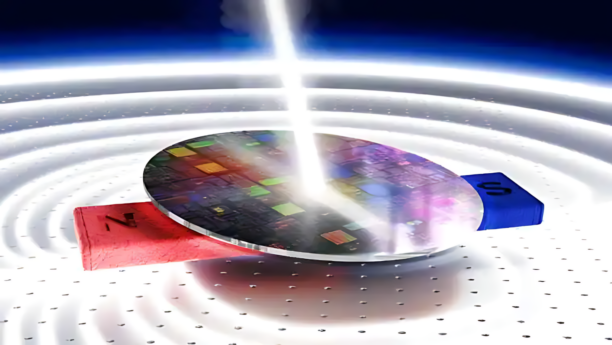
An international team of scientists has, for the first time, detected an extremely weak and previously thought impossible optical Hall effect in non-magnetic metals such as aluminum, copper, and gold. This discovery could significantly deepen our understanding of how light interacts with magnetic fields in everyday metals—potentially impacting technologies
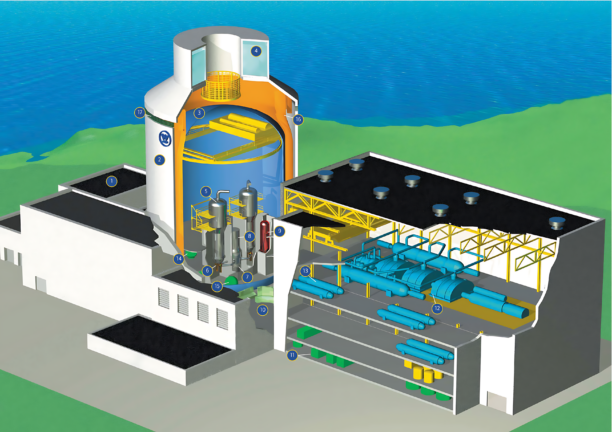
Westinghouse Electric Company has partnered with Google Cloud to harness artificial intelligence in accelerating the design and construction of nuclear reactors. The collaboration integrates key AI tools from Google — including Vertex AI, Gemini, and BigQuery — with Westinghouse’s proprietary platforms, such as the HiVE system and the Bertha language model. Vertex AI is used […

Chinese scientists from the Aerospace Information Research Institute have developed an innovative high-speed radio communication system that remains invisible to radio interception methods. Using a “smart” metamaterial surface composed of hundreds of tunable tiles, the system encodes messages into the radar echo of synthetic aperture radar (SAR) satellites.

DeepMind, Google’s AI lab, has introduced a method called “inner agent speech” that enables robots to generate an internal monologue to describe observed tasks and link them to actions. This approach, outlined in a patent application, helps robots learn new tasks without prior training, reducing memory and computational demands while improving behavior
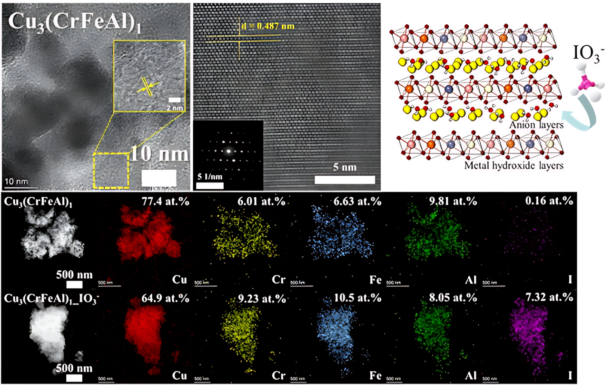
Scientists in South Korea, using artificial intelligence, have developed a sorbent that captures over 90% of radioactive iodine-129, a hazardous nuclear waste isotope with a half-life of 15.7 million years. The new material, based on copper, chromium, iron, and aluminum (Cu₃(CrFeAl)), effectively absorbs iodate (IO₃⁻), outperforming traditional cleanup methods.