
ECOSPHERE

In 2023, the oceans experienced record-breaking marine heatwaves (MHWs), covering 96% of their surface and raising average temperatures by 1.3°C above normal. These heatwaves lasted 120 days, four times longer than in previous decades. Scientists link this to the ocean losing its role as a climate buffer—instead of absorbing excess heat, it has become a […

Scientists at the Beijing Institute of Technology have created radio-controlled cyborg bees, blending entomology and robotics. The key component is an ultralight neural interface, weighing 74 mg, attached to the bee’s back with three needles connected to its brain. This interface achieves 90% accuracy in controlling flight, marking a breakthrough in insect control.
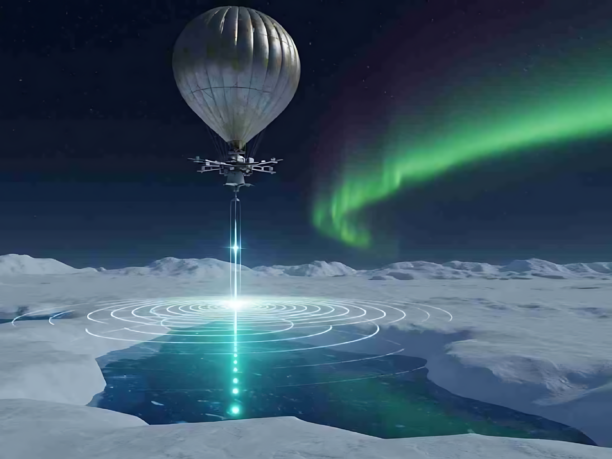
The ANITA experiment, conducted from a balloon over Antarctica, detected anomalous radio pulses that defy modern physics. The antenna, designed to capture Cherenkov radiation from high-energy neutrinos, recorded signals emerging from deep within Earth at an angle 30 degrees below the horizon. This suggests that the particles passed through thousands

An international team of scientists has decoded the structure of the light-harvesting complex of Photosystem I (PSI) in the ancient cyanobacterium Anthocerotibacter panamensis, marking a major step toward understanding the origins of oxygenic photosynthesis — the process that dramatically transformed Earth’s atmosphere.
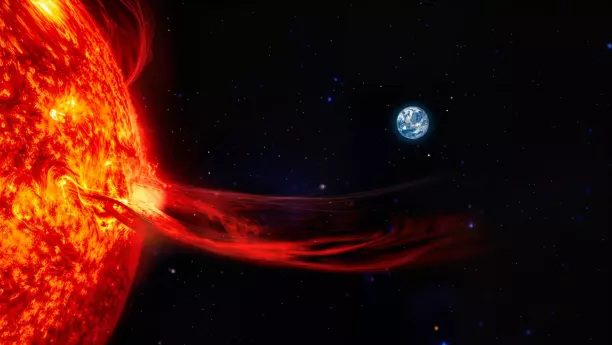
Scientists at Queen’s University Belfast have discovered that Earth’s atmosphere reacts to solar flares almost instantaneously—much faster than previously thought. Their research revealed a direct response in the ionosphere to pulsing solar radiation triggered by a powerful flare in 2012. These flares, caused by the reconfiguration of magnetic energy
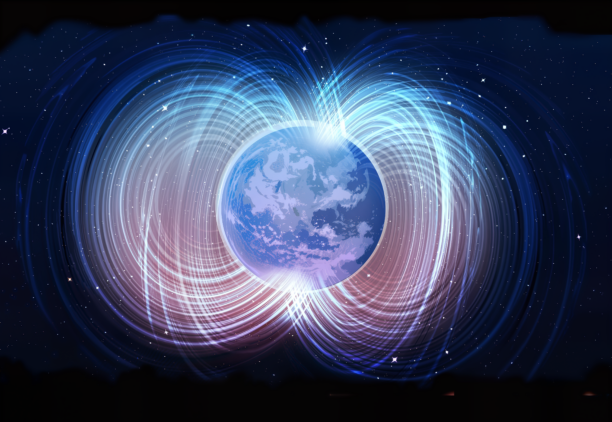
Scientists from the University of Michigan have discovered that Earth’s magnetic north and south poles have flipped multiple times throughout the planet’s history. These events, known as geomagnetic excursions, are caused by shifts in Earth’s liquid outer core. One such event occurred around 42,000 years ago, during which the magnetic field weakened to just 10% […