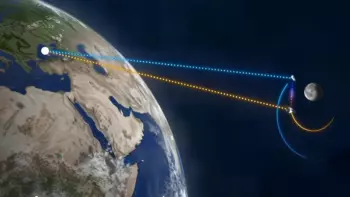
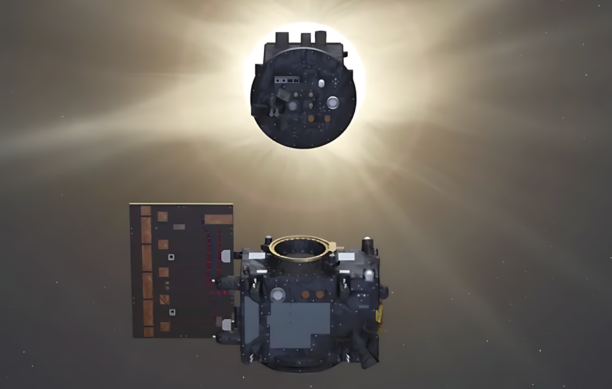
The European Space Agency’s Proba-3 mission has pulled off a historic first: an artificial solar eclipse. Two satellites, dubbed the “Occulter” and the “Coronagraph,” worked in perfect sync on orbit to cast a shadow about 8 centimeters wide, mimicking a total eclipse. This allowed scientists to observe the Sun’s corona—usually visible only during natural eclipses—without stray light interference, a breakthrough for studying solar wind and coronal mass ejections (CMEs) that impact Earth.
The feat was made possible by cutting-edge autonomous navigation technology, enabling the satellites to maintain a precise 150-meter separation. The Occulter, equipped with a 1.4-meter disk, blocks the Sun’s light, while the Coronagraph, carrying the ASPIICS instrument, captures high-quality images of the corona with minimal stray light. Additional onboard tools measure solar radiation and energetic electrons in Earth’s radiation belts. Precision was critical: the shadow had to align perfectly with ASPIICS’ lens.
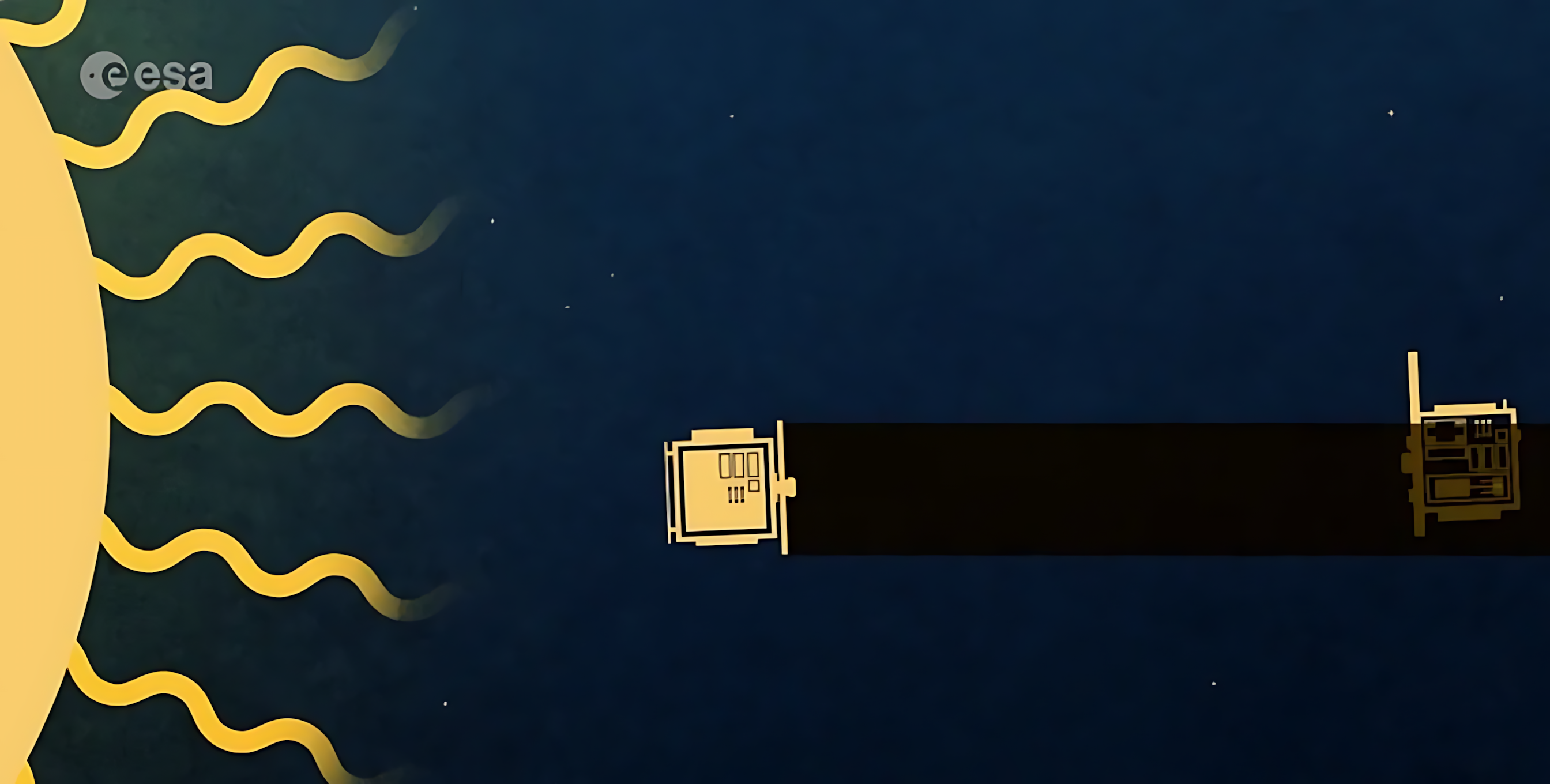
The data collected is feeding models to predict space weather, helping protect power grids, satellites, and radio communications. The experiment also showcased the success of autonomous satellite operations, reducing the need for ground control. Unlike rare natural eclipses, Proba-3 can observe the corona every 19.6 hours for six-hour stretches, vastly expanding research opportunities.
#space #science #educational #technology