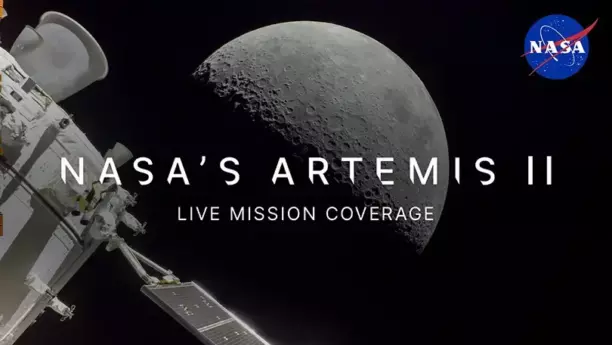
At the Google Cloud Next 2026 conference, Google Cloud revealed one of its most compelling real-world use cases for agent-based AI systems. During a keynote, CEO Thomas Kurian stated that Gemini Enterprise agents played a key role in preparing the Artemis II mission and ensuring crew safety. The example was presented as a demonstration of how so-called “agentic” technologies can operate in high-stakes, mission-critical environments.
Artemis II marked the first crewed mission beyond low Earth orbit since Apollo 17. The Space Launch System rocket carrying the Orion spacecraft launched on April 1, 2026. A crew of four astronauts completed a ten-day lunar flyby and safely returned to Earth, setting a new record for distance traveled from the planet—surpassing the achievement of Apollo 13.
According to Google, Gemini Enterprise–based agents were used during the preparation and launch-readiness phases. They automated the analysis of data streams from thousands of sensors, monitored critical systems, and supported real-time decision-making. Tasks like these traditionally require significant time and resources, but agent-based systems helped accelerate workflows and improve mission reliability.
While details of the integration remain undisclosed, this case highlights the growing maturity of AI agents in environments with extreme reliability requirements. NASA has long used cloud technologies and AI in scientific research, but Artemis II became the first crewed mission where such tools were directly integrated into the preparation pipeline. The broader Artemis program aims to return humans to the Moon, with the next major milestone being a surface landing as part of Artemis IV, planned for 2028.
#space #science #educational #technology