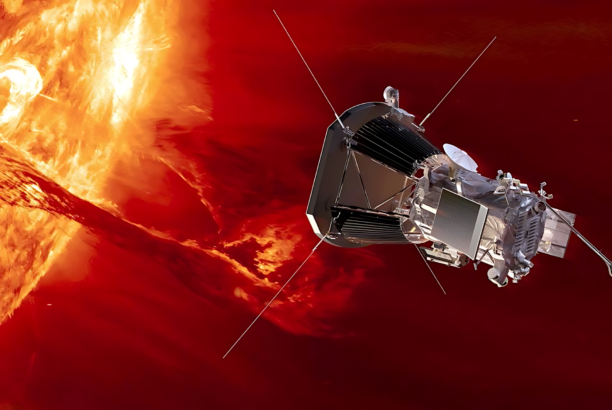
On June 9, 2025, NASA’s Parker Solar Probe completed the primary phase of its mission by making its 24th and closest-ever flyby of the Sun. During this pass, the probe reached an unprecedented distance of just 6.2 million kilometers (3.85 million miles) from the solar surface, accelerating to a speed of 687,000 km/h (427,000 mph) — the fastest velocity ever achieved by a human-made object. This historic maneuver concludes the main part of the mission, which began in 2018 with the goal of studying the Sun’s outer atmosphere — the corona — in unprecedented detail.
Following this flyby, the probe will remain in solar orbit and continue gathering scientific data at least through 2026, at which point NASA will decide whether to extend or conclude the mission. As of July 2025, all systems aboard the spacecraft are functioning normally, allowing observations to continue without limitation. The Parker probe was engineered to endure the Sun’s extreme heat and radiation, allowing it to approach the powerhouse of our solar system like no spacecraft before.
During its flights, Parker collects vital data on solar wind, magnetic storms, coronal mass ejections, and other phenomena that shape space weather. These observations help scientists better understand how the Sun affects Earth and other planets — including potential threats to satellites, power grids, and communication systems. One of the mission’s key discoveries confirmed that solar wind accelerates closer to the Sun’s surface. The probe also detected “switchbacks” — sudden, rapid reversals in the Sun’s magnetic field — a phenomenon never directly observed before.
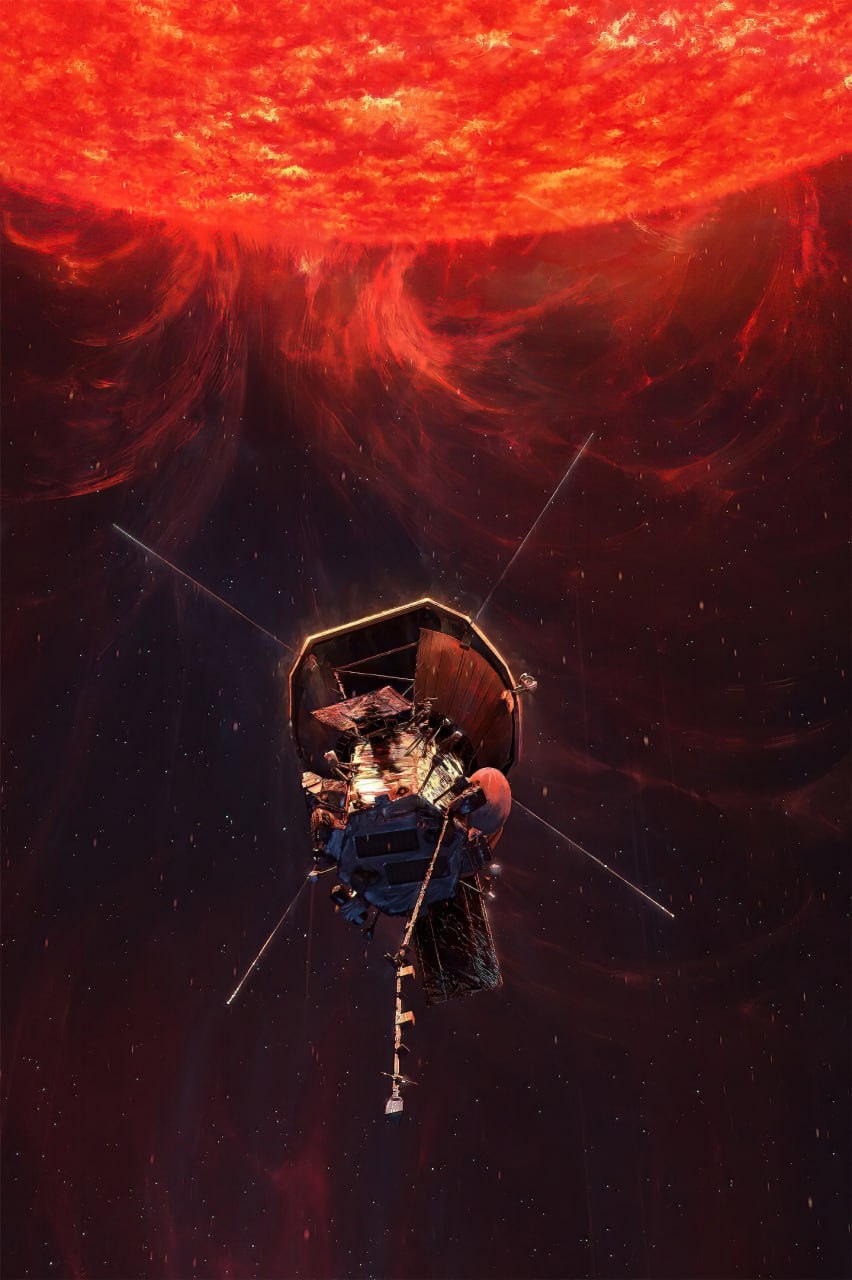
Parker is also the first spacecraft to fly through the upper layers of the Sun’s corona — a feat once thought impossible. Its unique data is already reshaping our understanding of how solar plasma and magnetic fields interact and could soon enable more accurate models of space weather, with implications for both future space exploration and life on Earth.
#space #science #educational #technology