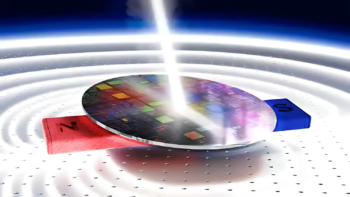

Chinese scientists from the Aerospace Information Research Institute have developed an innovative high-speed radio communication system that remains invisible to radio interception methods. Using a “smart” metamaterial surface composed of hundreds of tunable tiles, the system encodes messages into the radar echo of synthetic aperture radar (SAR) satellites. The tiles switch between 0° and 180° phases, enabling data transmission at 127 Kbps—comparable to NATO’s Link 16 tactical network—without actively emitting electromagnetic waves, making the signal indistinguishable from natural background noise.
The technology eliminates the risk of detection inherent in traditional radio communication, where transmissions could reveal a location. The system modulates SAR echo signals, ensuring stealth and security. However, the development faced challenges: it required synchronizing the SAR’s linear frequency modulation with data encoding, minimizing the impact of urban electromagnetic interference, sea backscatter, and ship motion while maintaining radar image accuracy with less than 10% resolution loss.
To overcome these hurdles, the team implemented adaptive algorithms, boosting the signal-to-noise ratio by 300% through dynamic phase modulation. Tests with China’s Gaofen-3 satellite under rough sea conditions (4 on the Beaufort scale, waves over 2 meters) showed a low error rate of 0.77%, thanks to error correction protocols. Additionally, research on metamaterials, published in *Nature Communications* (2023), confirms that such surfaces can manipulate electromagnetic waves with high precision, enhancing the technology’s potential.
The system has passed laboratory tests, but field trials are still ahead. If successful, it could provide a significant advantage in military communication, offering covert and reliable data transmission in contested environments. This could reshape approaches to tactical communication, especially in conflict zones.
#space #science #educational #technology