

Astronomers have proposed that the Milky Way resides in a massive cosmic void—a region with 20% lower matter density than average, spanning a radius of about one billion light-years. This hypothesis, presented at NAM 2025, explains the “Hubble tension”—a discrepancy in measurements of the universe’s expansion rate, suggesting that the local void accelerates galaxy motion […

DeepMind, Google’s AI lab, has introduced a method called “inner agent speech” that enables robots to generate an internal monologue to describe observed tasks and link them to actions. This approach, outlined in a patent application, helps robots learn new tasks without prior training, reducing memory and computational demands while improving behavior
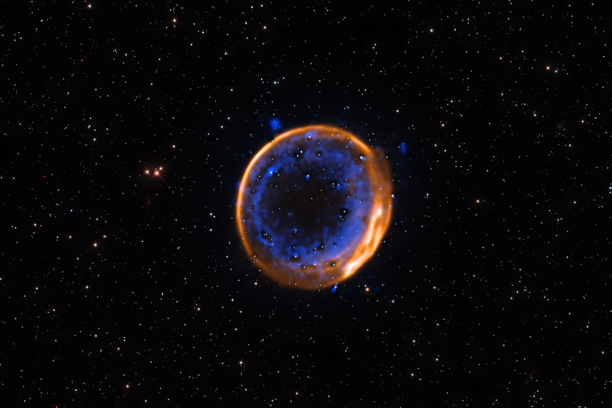
Astronomers using the European Southern Observatory’s Very Large Telescope (VLT) have obtained the first visual evidence of a double detonation in the supernova remnant SNR 0509-67.5, located in the Large Magellanic Cloud. The study, published in *Nature Astronomy*, reveals that some white dwarfs explode twice: first, the helium layer detonates, then the carbon-oxygen core.
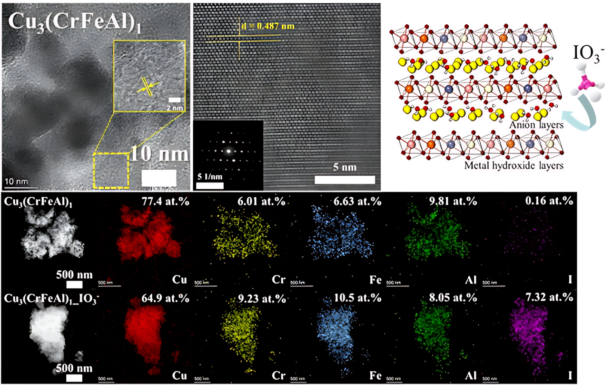
Scientists in South Korea, using artificial intelligence, have developed a sorbent that captures over 90% of radioactive iodine-129, a hazardous nuclear waste isotope with a half-life of 15.7 million years. The new material, based on copper, chromium, iron, and aluminum (Cu₃(CrFeAl)), effectively absorbs iodate (IO₃⁻), outperforming traditional cleanup methods.

Physicists have, for the first time, detected light that passed through an adult human skull, traveling 15.5 cm and undergoing significant signal attenuation. The study, published in Neurophotonics, used a pulsed laser and a time-correlated single-photon detection system, capturing about one photon per second after 30 minutes of data collection.
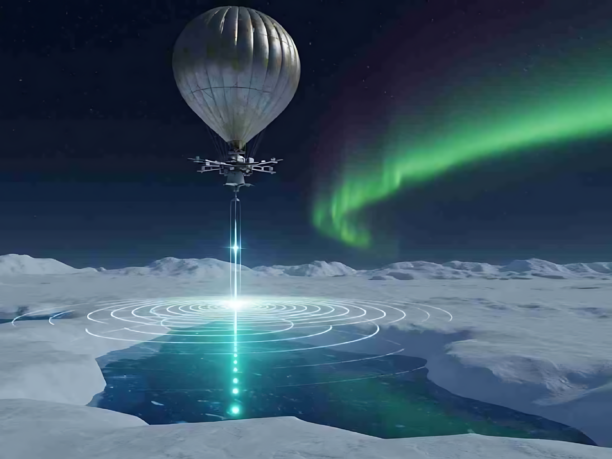
The ANITA experiment, conducted from a balloon over Antarctica, detected anomalous radio pulses that defy modern physics. The antenna, designed to capture Cherenkov radiation from high-energy neutrinos, recorded signals emerging from deep within Earth at an angle 30 degrees below the horizon. This suggests that the particles passed through thousands