
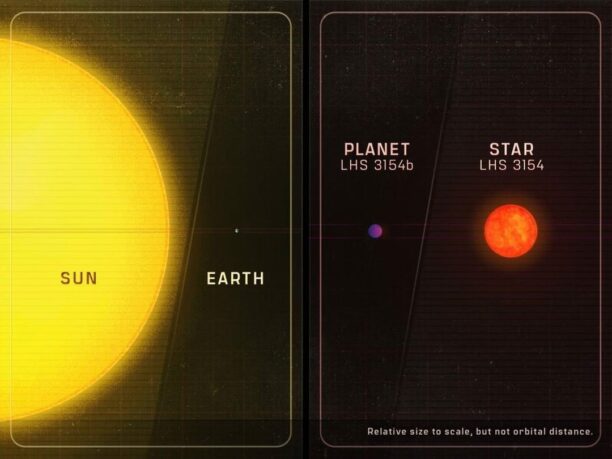
Astronomers have identified a groundbreaking exoplanet, LHS 3154b, that defies established theories of planetary formation. Published in Science, the study reveals that the planet is 13 times the mass of Earth, despite orbiting a cool dwarf star, LHS 3154, whose mass is just one-ninth that of the Sun. According to existing models, such a combination […

Astronomers in the UK have proposed a groundbreaking explanation for the “Hubble tension”—the puzzling discrepancy in measurements of the Universe’s expansion rate across different epochs. Their study, published in the Monthly Notices of the Royal Astronomical Society (MNRAS), suggests that the Milky Way could lie within a colossal

Saudi Arabia has launched the world’s longest automated metro network in Riyadh, spanning 176 kilometers and featuring 85 stations. This cutting-edge system is set to redefine urban transit, easing traffic congestion and cutting CO₂ emissions by an estimated 10.8 million tons annually. Three lines became operational on December 1, with a fourth to follow in […

Quantum dots—tiny structures that confine charge carriers—are driving transformative advances in quantum computing. While materials like gallium arsenide and silicon have traditionally led the field, researchers at Tohoku University in Japan have uncovered surprising potential in zinc oxide, a material celebrated for its strong electron correlations
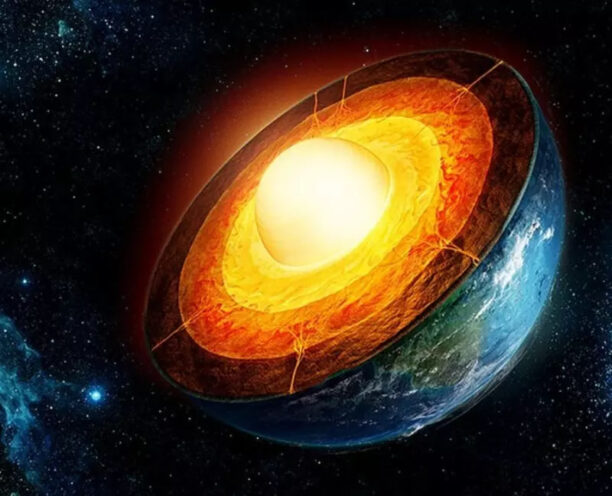
American scientists are raising concerns about dynamic changes within Earth’s core that could have far-reaching consequences for the planet’s stability. These processes, while still under investigation, may influence Earth’s rotational dynamics and contribute to geophysical phenomena with potentially severe environmental and societal impacts.