An international team of scientists has, for the first time, detected an extremely weak and previously thought impossible optical Hall effect in non-magnetic metals such as aluminum, copper, and gold. This discovery could significantly deepen our understanding of how light interacts with magnetic fields in everyday metals—potentially impacting technologies from smartphones to quantum computers.
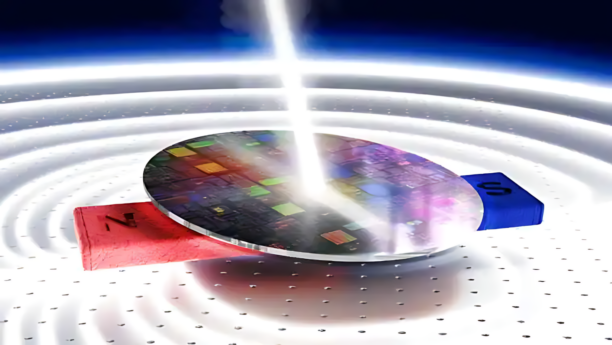
The effect, known as the magneto-optical Kerr effect (MOKE)—where a magnetic field alters how light is reflected—was amplified using a blue laser in combination with magnetic field modulation. This enhancement made it possible to detect “magnetic echoes” even in materials previously believed to be magnetically inert. The team demonstrated that the faint “noise” in the signal is quantum in nature, stemming from spin-orbit interactions between electrons.
This method allows scientists to probe magnetism without physically touching the sample—a crucial advantage for nanotechnology applications. Its high sensitivity makes it especially promising for spintronics, quantum computing, and the development of next-generation sensors and energy-efficient processors.
In doing so, the researchers solved a puzzle that physicist Edwin Hall had struggled with back in the 19th century—transforming a 150-year-old scientific mystery into a modern technological breakthrough.
#space #science #educational #technology