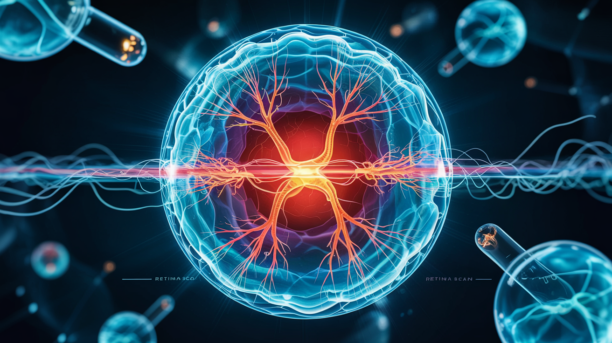
South Korean scientists have developed a method to restore vision in degenerative retinal diseases by blocking Prox1 — a key inhibitor of regeneration in mammals. Unlike cold-blooded vertebrates, in which Müller glial (MG) cells can regenerate retinal neurons, this ability is suppressed in humans due to Prox1 activity. A study published in Nature Communications showed that blocking Prox1 transport allows MG cells to reprogram into neural progenitor cells.
Experiments on mice demonstrated that this approach leads to sustained retinal restoration for at least six months. The method holds promise for treating currently incurable diseases such as retinitis pigmentosa, glaucoma, and age-related macular degeneration. Unlike existing therapies that only slow disease progression, this new strategy could potentially restore lost vision.
The technique has so far only been tested in animals, with human clinical trials not expected before 2028. Still, this research complements other avenues in regenerative ophthalmology, including gene therapy, laser stimulation, and stem cell transplantation.
Given the rapid aging of the global population, restoring vision is becoming a strategic medical priority. The study’s authors hope their findings will lay the foundation for fundamentally new treatments, offering hope to patients who were once considered beyond help.
#space #science #educational #technology