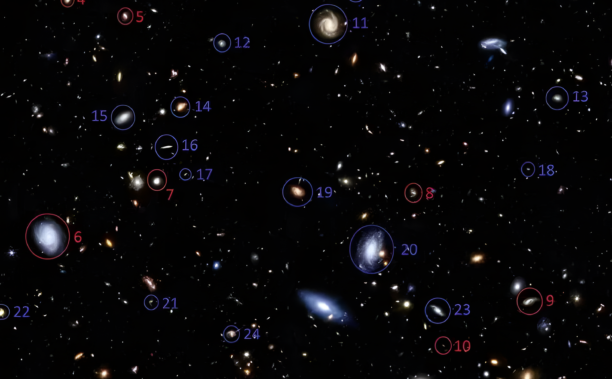
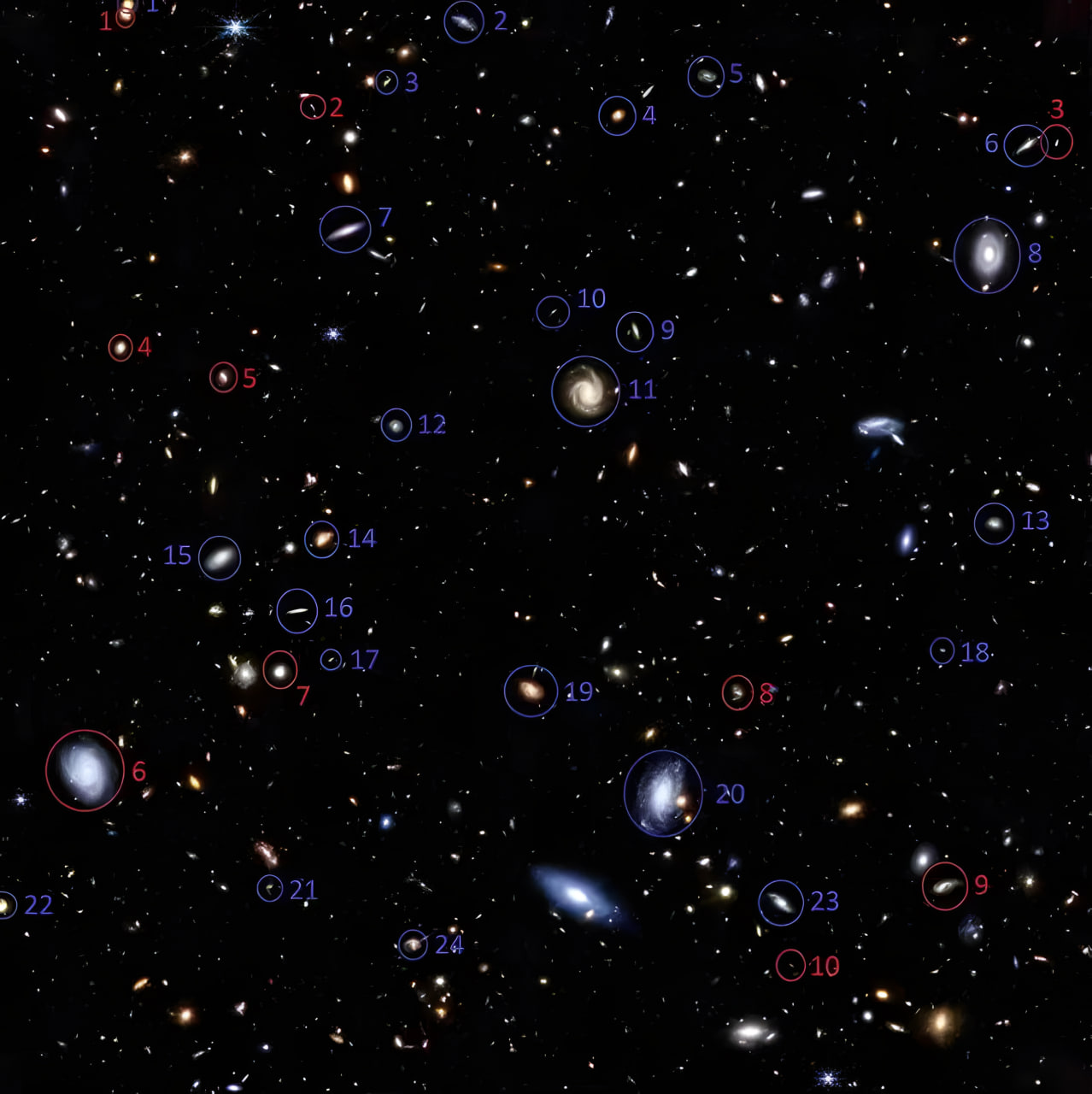
The James Webb Space Telescope has provided invaluable data on the farthest reaches of the universe during its three years of operation. A recent study revealed an unusual pattern: two-thirds of the 263 observed galaxies rotate in the same direction, challenging conventional ideas about symmetry in the universe. These findings, obtained through NASA’s JADES program, may hold the key to confirming the theory that our universe exists inside a black hole.
Lead researcher Lior Shamir explains that one possible cause of this anomaly is the universe’s initial rotation. This aligns with the black hole cosmology hypothesis, which suggests that the boundary of the observable universe coincides with the event horizon of a massive black hole. According to this model, each black hole could be a gateway to a new, hidden universe—though direct observational proof remains elusive.
Another explanation proposes that the observed effect could stem from the rotation of the Milky Way itself. If its influence on measurements has been underestimated, astronomers may need to reassess how they calculate distances in the distant universe. This could help resolve the discrepancy in measurements of the universe’s expansion rate and explain why some galaxies appear older than the universe itself.
The study opens new avenues for cosmology, challenging existing models. Some scientists suggest alternative theories, including the concept of an “anti-universe” that could account for the accelerated expansion of the cosmos without invoking dark energy or modified gravity.
#space #science #educational #technology