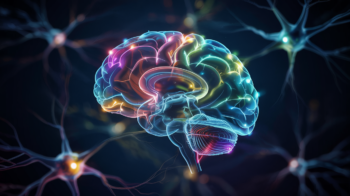

Researchers in the Netherlands have presented the clearest evidence yet that lucid dreaming represents a distinct state of consciousness. Using the world’s largest collection of EEG data, they demonstrated that the sleeping brain can shift into a conscious mode of perception—one previously undescribed in neuroscience. This discovery sheds new light on the complex nature of lucid dreams, in which the dreamer is aware they are dreaming.
The team compiled data from five labs, analyzing 44 episodes of lucid dreaming in 26 experienced dreamers—a record volume for the field. They developed a multi-step algorithm to clean the signals and eliminate artifacts from eye and muscle movement. Researchers then compared four brain states: lucid REM sleep, early and late regular REM sleep, and relaxed wakefulness.
Deeper analysis revealed key differences: lucid dreams were marked by reduced beta activity in the right temporoparietal junction (involved in self-awareness and spatial perception) and spikes in gamma activity in the left temporal lobe (linked to speech and comprehension). This may suggest the presence of inner dialogue and self-awareness within the dream. Additionally, lucid dreaming showed increased alpha coherence, distinguishing it from psychedelic states and pointing to heightened self-consciousness.
While brain activity in lucid dreaming is not as intense as in wakefulness, it is more complex than in ordinary sleep. Since lucid dreaming can be trained, this research opens new possibilities for treating nightmares, processing trauma, and unlocking creative potential.
#space #science #educational #technology