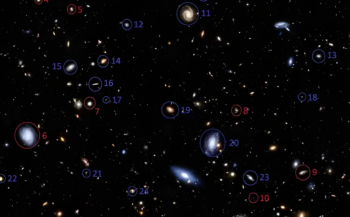
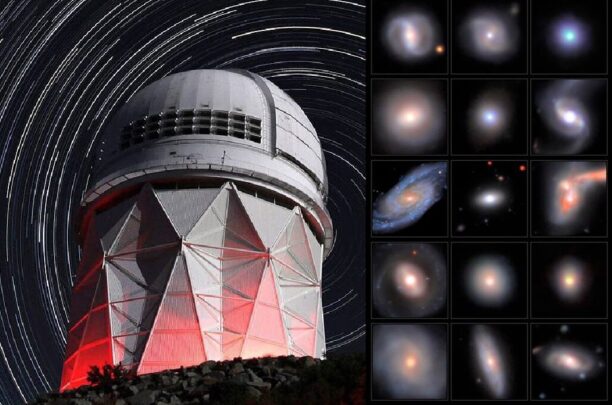
The DESI instrument has made a breakthrough in astronomy, detecting over 300 potential “seeds” of supermassive black holes in dwarf galaxies. Over the course of a year, DESI collected data on 115,000 such galaxies, identifying objects emitting powerful streams of matter. Surprisingly, these “seeds” were found not only in small galaxies but also in larger ones, challenging existing theories on the formation of intermediate-mass black holes.
According to Pucha Raghadipika from the University of Utah, the number of known objects of this kind has tripled, helping scientists understand how supermassive black holes—some with masses reaching billions of suns—come into existence. DESI captures the activity of black holes ejecting matter, indicating their early developmental stages.
The connection between these “seeds” and the evolution of supermassive black holes is still under investigation, but researchers are already planning further observations. Interestingly, other studies, including those using the JWST telescope, also support the “heavy seed” hypothesis. In 2023, astronomers discovered a black hole in galaxy UHZ1 that likely formed from a massive cloud of gas soon after the Big Bang. This suggests that such “seeds” may have provided a rapid start for the growth of cosmic giants.
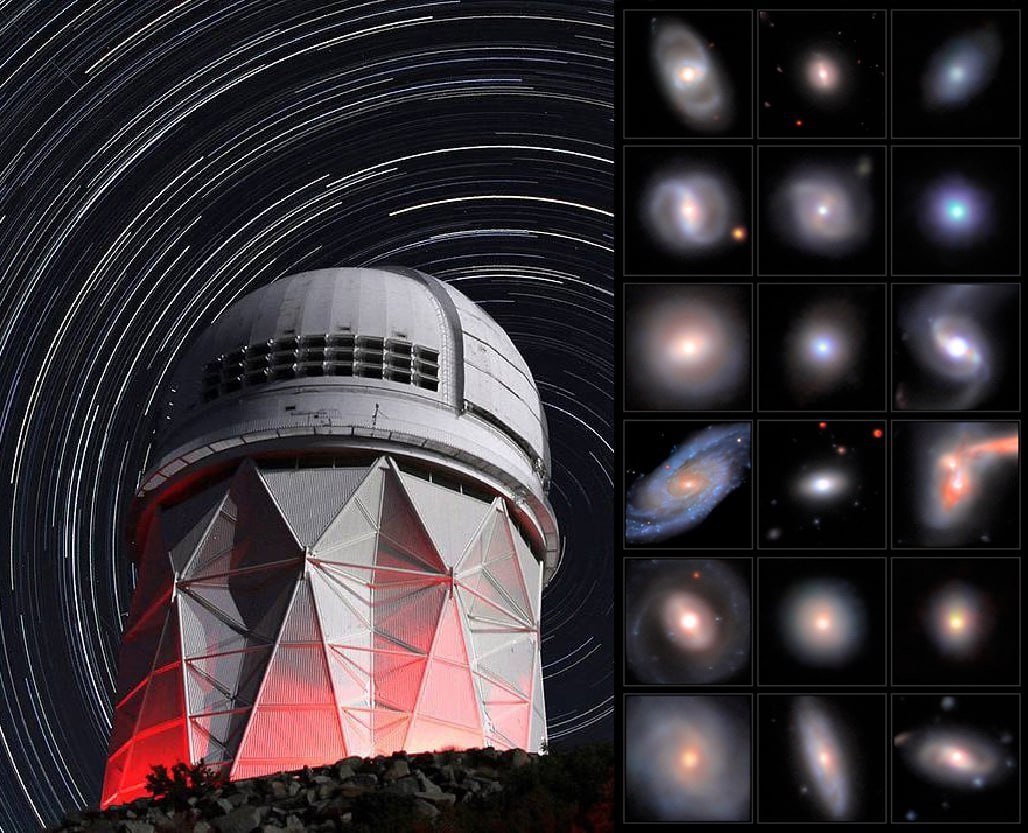
DESI’s discovery is a major step toward understanding how black holes become supermassive. However, one big question remains: will all these “seeds” grow into giants, or will some remain “dwarfs”? 🔭
#space #science #educational #technology