
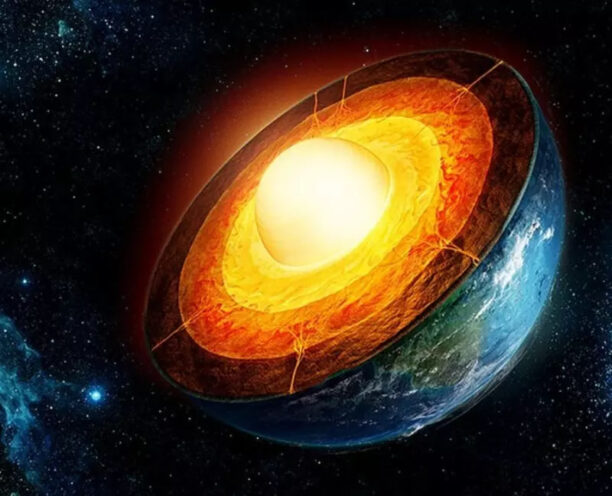
American scientists are raising concerns about dynamic changes within Earth’s core that could have far-reaching consequences for the planet’s stability. These processes, while still under investigation, may influence Earth’s rotational dynamics and contribute to geophysical phenomena with potentially severe environmental and societal impacts.
Preliminary studies suggest that shifts in Earth’s core, combined with the accelerating effects of global warming, could amplify the frequency and intensity of natural disasters. Events such as earthquakes, volcanic eruptions, and tsunamis—already increasing in scale and severity—may be indirectly influenced by complex interactions between the core and Earth’s surface systems. Additionally, researchers have noted subtle variations in Earth’s rotation and shifts in its axis, which could further destabilize climate patterns.
Another critical concern is the disruption of global heat regulation systems, particularly the oceans. These natural reservoirs, essential for absorbing and redistributing heat, are under strain due to rising temperatures and environmental degradation. If their regulatory capacity diminishes, the resulting feedback loops could accelerate planetary overheating and amplify extreme weather events.
Scientists emphasize that while core dynamics are not directly caused by human activity, they are part of an interconnected system increasingly stressed by anthropogenic impacts. The findings highlight the urgent need for global action to mitigate climate change, strengthen ecosystems, and expand monitoring of Earth’s internal and surface processes.
By addressing these challenges proactively, humanity can work to stabilize planetary systems and safeguard a livable future for generations to come.
#space #science #educational #technology