Astronomers in the UK have proposed a groundbreaking explanation for the “Hubble tension”—the puzzling discrepancy in measurements of the Universe’s expansion rate across different epochs. Their study, published in the Monthly Notices of the Royal Astronomical Society (MNRAS), suggests that the Milky Way could lie within a colossal cosmic void, potentially resolving one of modern astrophysics’ most persistent mysteries.
The Hubble constant, which measures the Universe’s expansion rate, is derived through two primary methods. The first analyzes the cosmic microwave background (CMB)—the faint radiation left over from the Big Bang—to determine the early Universe’s expansion. The second relies on observing the motion of nearby galaxies to assess the current rate. However, these approaches yield conflicting results: early-Universe measurements point to slower expansion, while local observations suggest a faster pace.
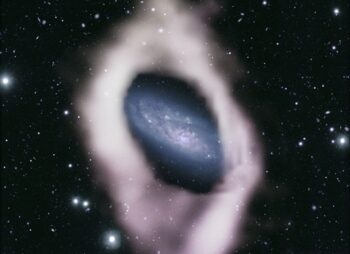
According to the researchers, the Hubble tension could arise from our galaxy’s location in an underdense cosmic region. In this “void,” the matter density is significantly lower than the cosmic average, which might distort the observed expansion rate. The void’s influence could subtly slow the light traveling from nearby galaxies, creating the illusion of an accelerated local expansion compared to the broader Universe.
If validated, this hypothesis would mark a paradigm shift in understanding how local cosmic environments affect global cosmological measurements. It could not only offer a resolution to the Hubble tension but also provide profound insights into the structure and evolution of the Universe, shedding light on the role of cosmic voids in shaping our perception of space-time.
#space #science #educational #technology