

Scientists have proposed using a mass spectrometer with a laser to vaporize material and analyze its chemical composition to search for fossilized microbes on Mars, according to Frontiers in Astronomy and Space Sciences. This method allows for the detection of ancient microorganisms in Martian rocks, such as gypsum, directly on-site without the need to return samples to Earth. The technology has already been tested on terrestrial gypsum from Algeria, which formed 5–6 million years ago in conditions similar to ancient Mars.
The experiment demonstrated that the mass spectrometer successfully detected clay minerals and dolomite in gypsum—substances associated with microbial activity, such as cyanobacteria or sulfide-oxidizing bacteria. On Mars, gypsum has been found in Gale Crater and Mawrth Vallis, locations that once may have hosted lakes and seas, making them promising sites for the search for biosignatures. The device can identify fossilized filamentous structures without requiring a microscope.
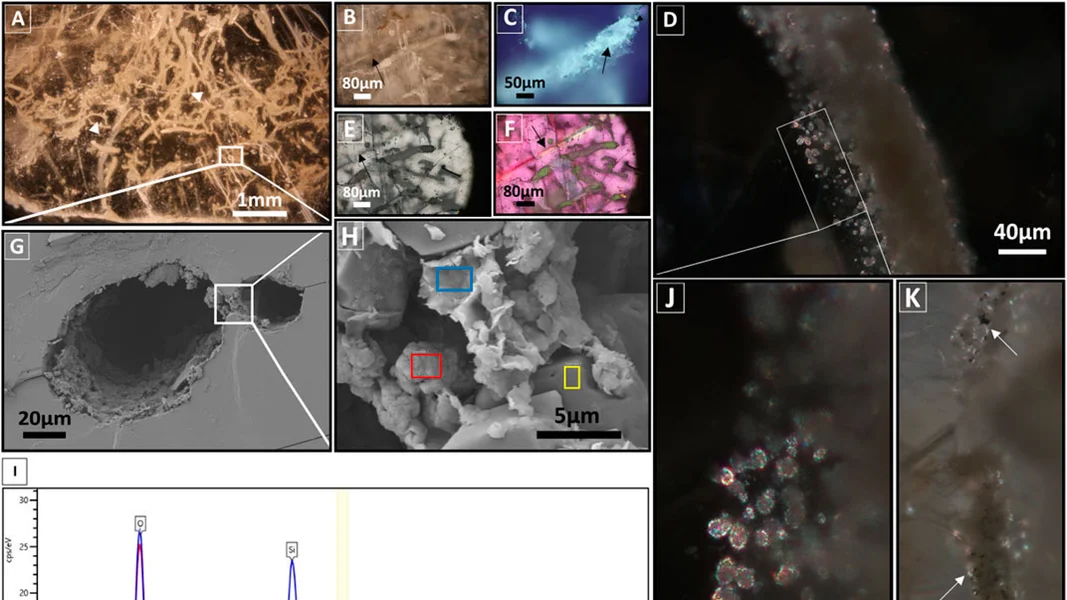
Mars’ environment, with its salts and evidence of past water bodies, resembles the conditions in which Algerian gypsum formed. The detection of clay and dolomite alongside gypsum could indicate biological activity, as bacteria contribute to their accumulation. While these minerals can also form through non-biological processes, the conditions on Mars make a biogenic origin more likely, encouraging further scientific exploration.
#space #science #educational #technology