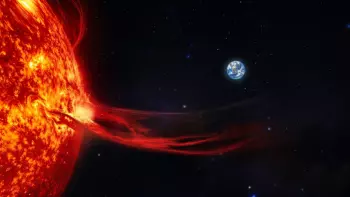
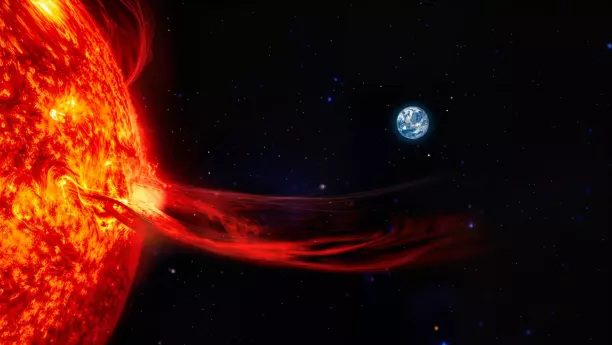
Scientists at Queen’s University Belfast have discovered that Earth’s atmosphere reacts to solar flares almost instantaneously—much faster than previously thought. Their research revealed a direct response in the ionosphere to pulsing solar radiation triggered by a powerful flare in 2012. These flares, caused by the reconfiguration of magnetic energy on the Sun, release immense bursts of energy in a short period, potentially disrupting radio communication, GPS systems, and satellites.
Using data from NASA’s Solar Dynamics Observatory (SDO) and ground-based stations, the researchers tracked the flare’s effect on the upper atmosphere. Ultraviolet radiation pulses were recorded every 90 seconds during the flare, and just 30 seconds later, synchronized changes in electron density were observed in the ionosphere. Graphs created by the team clearly showed a matching rhythm between solar pulses and Earth’s atmospheric response.
This synchronization continued for about 10 minutes, during which quasiperiodic fluctuations matched both the frequency and timing of the solar emissions. Researchers ruled out random noise and confirmed the statistical significance of the correlation. As lead author Aisling O’Hare described, the phenomenon resembled the atmosphere “breathing” in sync with the Sun.
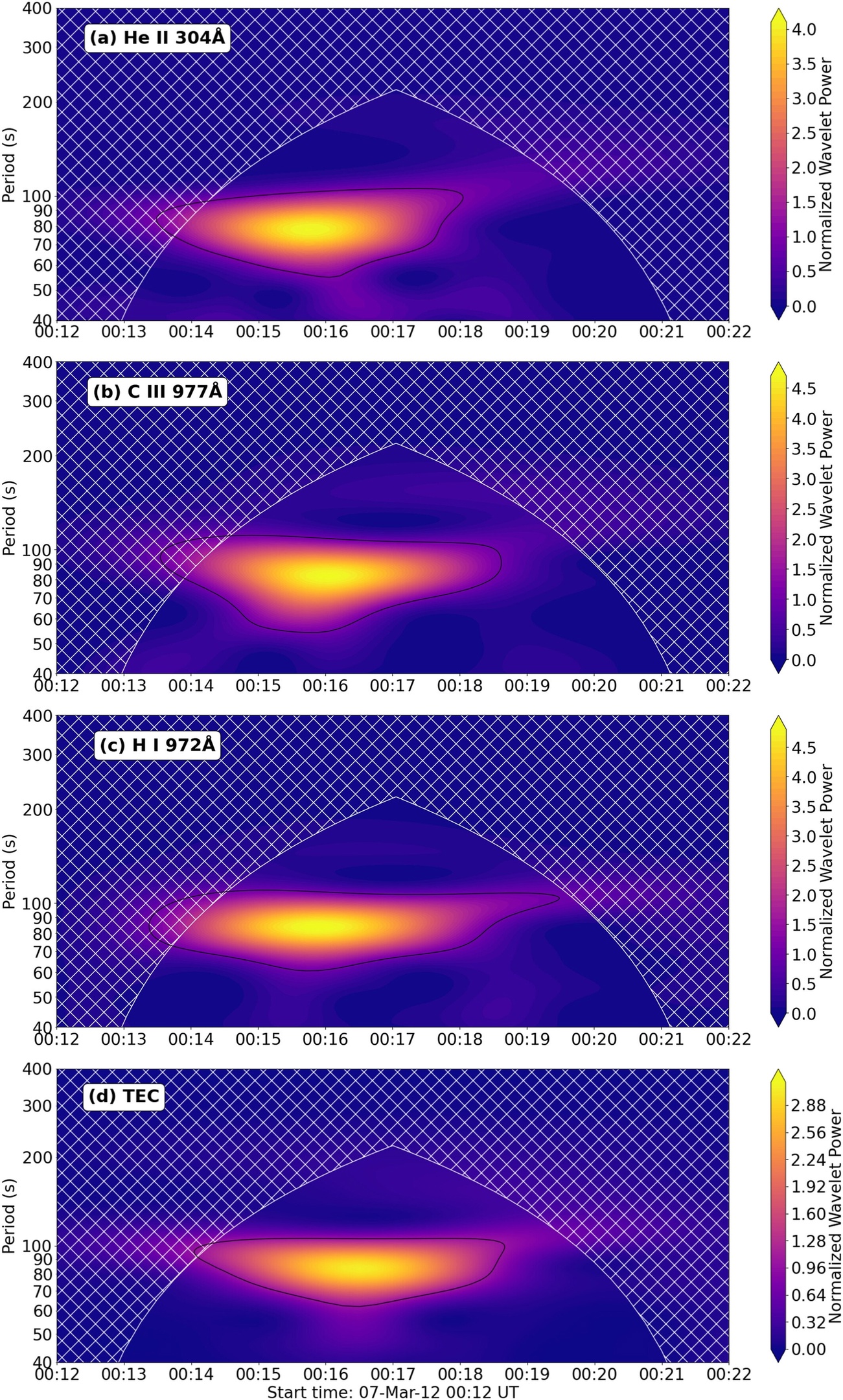
Despite the precision of these observations, the exact physical mechanism behind such a rapid connection remains unclear. Project lead Ryan Milligan suggested that X-rays or high-speed charged particles may be responsible, but further research is needed. The study took place during a solar maximum, allowing for a rich dataset and highlighting the importance of developing real-time space weather response systems.
This discovery not only deepens our understanding of Sun–Earth interactions but also opens new pathways for research. The next step will be to analyze additional flares to determine whether this synchronicity is a widespread phenomenon or a rare occurrence.
#space #science #educational #technology