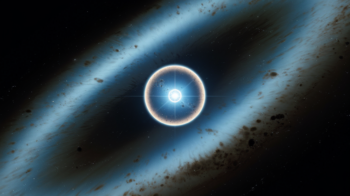

Astronomers using the Keck Observatory in Hawaii and the state-of-the-art Keck Planet Finder (KPF) spectrograph have, for the first time, detected faint oscillations in the cool star HD 219134, located just 21 light-years from Earth. These vibrations, studied through asteroseismology, provide a glimpse into the star’s interior, allowing scientists to determine its mass, radius, and age. This marks the first time such an analysis has been carried out on a cool star using a ground-based spectrograph—something previously considered impossible.
Thanks to KPF’s precise measurements, the team determined that HD 219134 is 10.2 billion years old—more than twice the age of the Sun. This discovery helps refine models of stellar aging, especially in the context of gyrochronology, which estimates stellar age based on rotation speed. Surprisingly, in stars like HD 219134, the slowdown in rotation appears to plateau with age, challenging existing models and opening new questions about stellar evolution.
The study also revealed a mismatch between the star’s radius as measured by interferometry and asteroseismology—the latter suggesting a smaller size. This discrepancy casts doubt on current models of stellar structure, particularly for cool stars, and raises questions about potential atmospheric or magnetic influences that remain to be investigated.
HD 219134 is also notable for hosting at least five planets, including two rocky super-Earths. With more accurate data on the star’s size, scientists have been able to refine their understanding of these planets, confirming that they likely have Earth-like compositions.
Looking ahead, instruments like KPF will allow astronomers to study other stars that may host life-bearing planets. As researchers note, to determine the age of a potentially habitable planet, one must “listen” to its star—just as they did with HD 219134.
#space #science #educational #technology