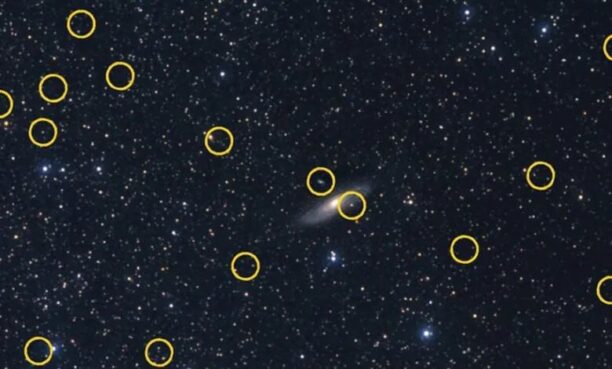
The Hubble Space Telescope has detected anomalous behavior among the satellite galaxies orbiting Andromeda, the largest neighbor of the Milky Way. Nearly half of them move within the same plane and in the same direction, contradicting standard models of galactic evolution. Scientists suggest this structure may have formed due to a large-scale cosmic event, but the exact cause remains unknown. This discovery, published in The Astrophysical Journal, challenges existing theories on galaxy formation and development.
Another mystery is the unusual star formation in Andromeda’s dwarf galaxies. Some of them continue forming stars much longer than current models predict. According to lead author Alessandro Savino, this phenomenon does not align with computer simulations and requires a reassessment of how small galaxies evolve under the influence of massive neighbors.
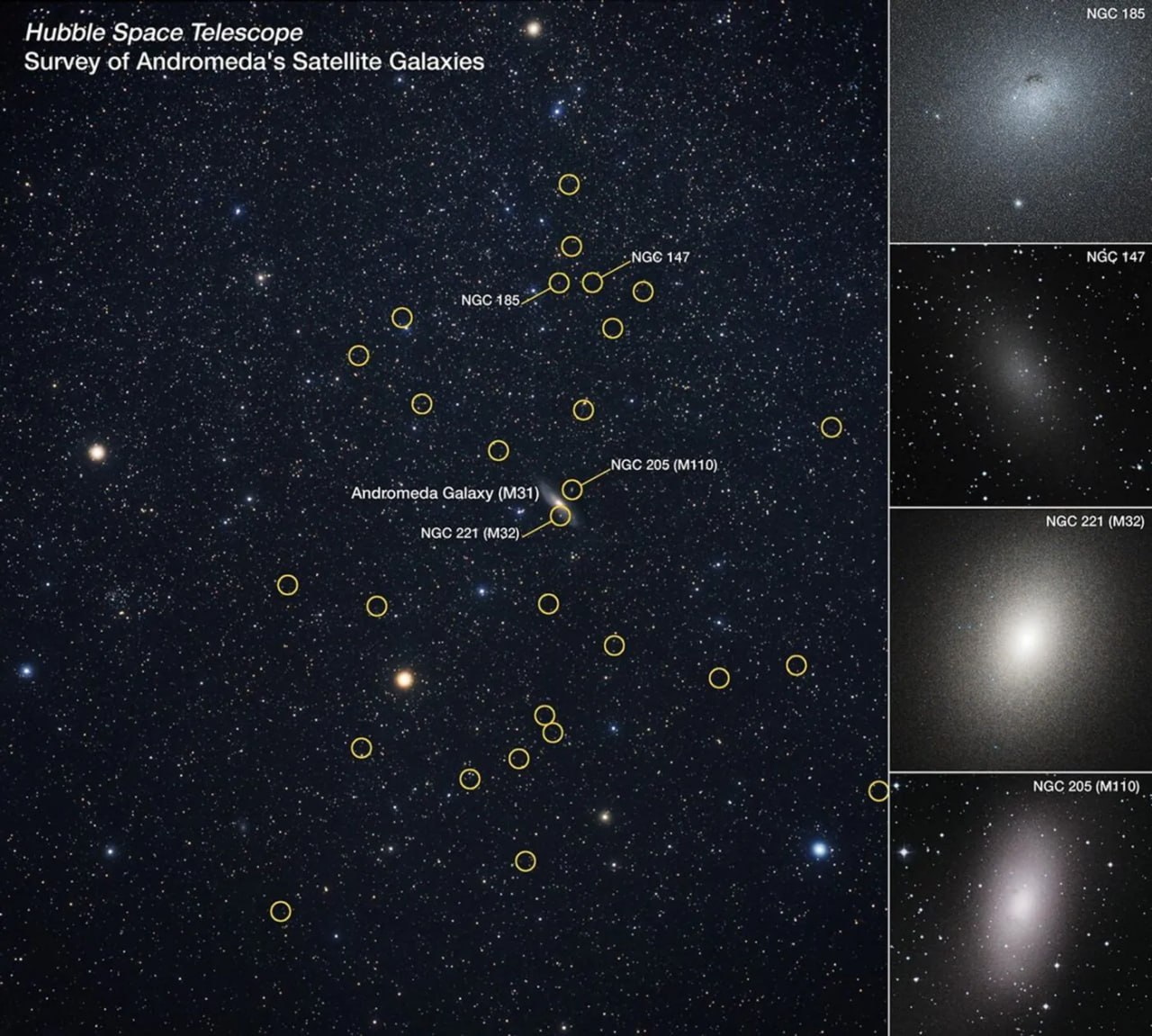
Astronomers suspect Andromeda may have undergone a merger with another large galaxy, which could explain the instability of its satellite system and its intensified influence on their development. Researchers now face the task of tracking the precise motions of all 36 satellite galaxies.
In the coming years, joint observations by Hubble and the James Webb Space Telescope will help reconstruct the history of this stellar system and potentially uncover traces of an ancient galactic collision. These findings could fundamentally reshape our understanding of galaxy formation and the evolution of the universe.
#space #science #educational #technology