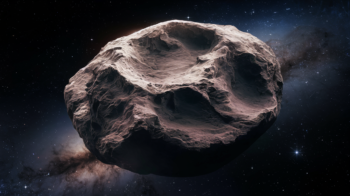

Scientists suggest that the absence of detectable signs of life in Enceladus’s water may be due to the unique properties of its subsurface ocean rather than a true lack of life. According to a study published in Nature Communications, the water on Saturn’s moon is stratified, meaning it is separated into layers that barely mix. As a result, if microorganisms exist, they may reside at the ocean floor, while the geysers that eject water into space only bring up surface layers devoid of biological traces.
Enceladus is a small, ice-covered moon of Saturn, but researchers believe a global ocean lies beneath its frozen shell. Due to Saturn’s gravitational pull, the icy moon experiences tidal stretching and compression, generating internal friction and heat. This process could keep the ocean’s temperature above freezing, especially if it contains salts that prevent ice formation.
The massive plumes erupting from Enceladus’s south pole reach heights of 500 km—comparable to the moon’s diameter. The Cassini spacecraft, which flew through these plumes between 2005 and 2010, detected amino acids, the fundamental building blocks of life. However, no direct evidence of biological activity was found. If the stratification hypothesis is correct, it suggests that future missions searching for life on Enceladus will need to develop techniques to probe deeper layers of its ocean.
#space #science #educational #technology