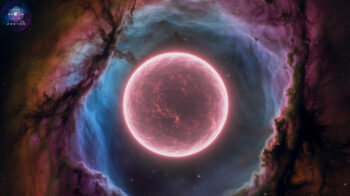

Astronomers have confirmed a long-standing hypothesis: planets are made of stardust. The key evidence comes from studying the galaxy NGC 2906, located 100 million light-years away. In 2005, the supernova explosion SN 2005ip was observed in this galaxy, during which a massive star shed its outer layers, dispersing vast amounts of gas and heavy particles formed within the star and during the explosion.
Supernovae act as cosmic particle accelerators, where atomic collisions generate heavier elements. In the remnants of SN 2005ip, astronomers discovered a significant amount of stardust, with a mass equivalent to about one-tenth of the Sun’s mass. This exceeds the combined mass of all the planets in our solar system, affirming that stardust is the primary building block of planets.
Our solar system, which formed 4.6 billion years ago, emerged from material enriched by earlier generations of stars. The Sun is classified as a second- or third-generation star, whereas the first stars following the Big Bang were composed primarily of hydrogen. This primordial element, the first to form in the universe, remains the most abundant to this day.
The study of supernova remnants like SN 2005ip not only explains the origins of planets but also sheds light on the processes behind the formation of stellar systems, including our own. Stardust ejected during these catastrophic events continues to create the conditions for the emergence of new worlds.
#space #science #educational #technology