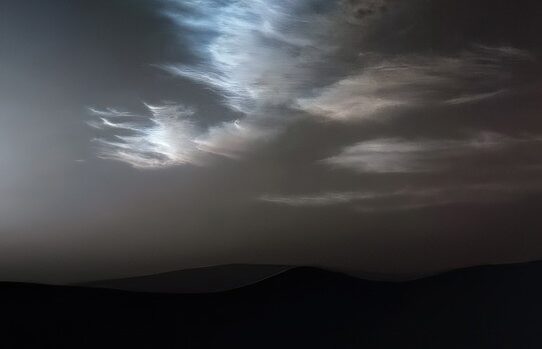
This phenomenon was captured by a rover stationed 225 million kilometers from Earth.
Mars’ atmosphere is too thin to support dense clouds, but under certain conditions, ice crystals can form delicate, wispy clouds at high altitudes. These clouds appear mostly in the cold morning hours when temperatures reach their lowest point.
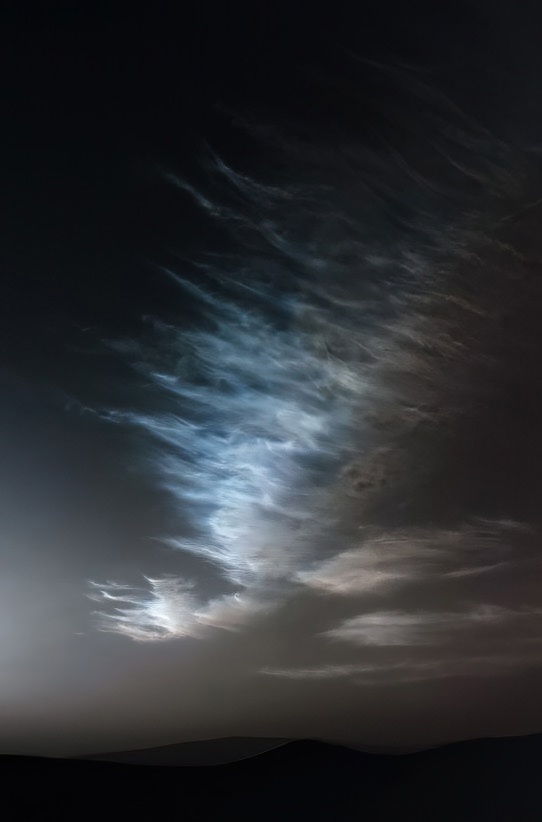
Such observations help scientists study the dynamics of Mars’ atmosphere and the processes involving water ice and dust. This data is crucial for understanding the planet’s climate and preparing for future missions, including potential human exploration.
#space #science #educational #technology