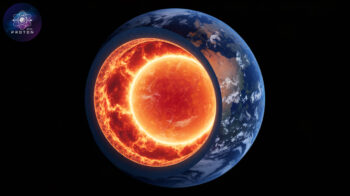

NASA scientists have observed a rare natural phenomenon — a rupture in Earth’s magnetic field lasting 17 hours. This event triggered vivid auroras visible in New Zealand. While such phenomena pose no direct threat to human health, astrophysicists warn that they could disrupt satellites and GPS systems.
Robert Johnson from NASA’s Goddard Center noted that such a prolonged disruption of the magnetosphere is unprecedented in recorded history. The first evidence of the event came from New Zealand, where photographer James Wilson captured unusually bright auroras over Lake Tekapo. “The sky lit up in emerald and purple hues. In 15 years of work, I’ve never seen anything like it,” he shared.
Michael Reynolds from Stanford University explained that magnetic field ruptures allow solar wind to penetrate, potentially affecting spacecraft and communication systems. However, he emphasized that the phenomenon poses no danger to life on Earth.
Researchers are closely monitoring the state of the magnetic field using advanced systems. They hope that studying such anomalies in detail will improve our understanding of solar-terrestrial interactions and their impact on technological infrastructure.
#space #science #educational #technology