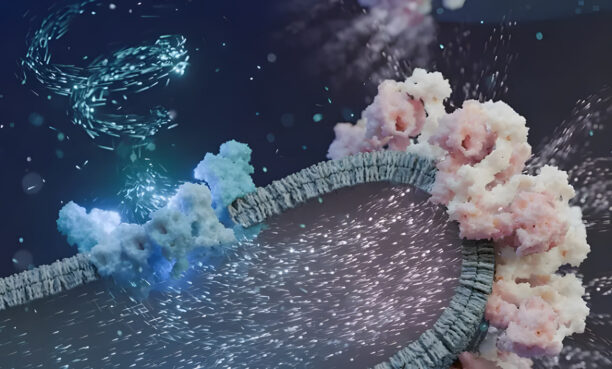
Researchers from the University of Basel have used cryo-electron tomography to study the architecture of mitochondria at unprecedented resolution. They discovered that proteins responsible for energy production form “supercomplexes,” which play a key role in the synthesis of ATP—the cell’s primary energy molecule. These supercomplexes pump protons across the membrane, creating a gradient that ATP synthase complexes use to generate energy.
The study was conducted on cells of the alga Chlamydomonas reinhardtii, where scientists identified a highly organized arrangement of all respiratory proteins into supercomplexes. This structure likely enhances ATP production efficiency by optimizing electron flow and minimizing energy loss. Additionally, researchers examined the mitochondrial membrane architecture, which, with its numerous folds, increases surface area for respiratory complexes.
Understanding the structure of these supercomplexes provides deeper insight into cellular respiration and its efficiency. In the future, scientists plan to investigate the mechanisms governing interactions between respiratory complexes, which could have significant implications for medicine and biotechnology. This knowledge may help uncover how disruptions in these processes contribute to human diseases and provide insight into the evolutionary adaptations of different organisms.
#space #science #educational #technology