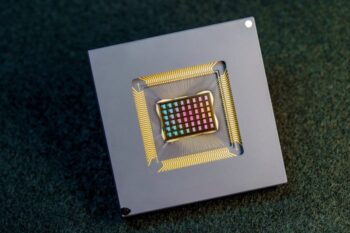
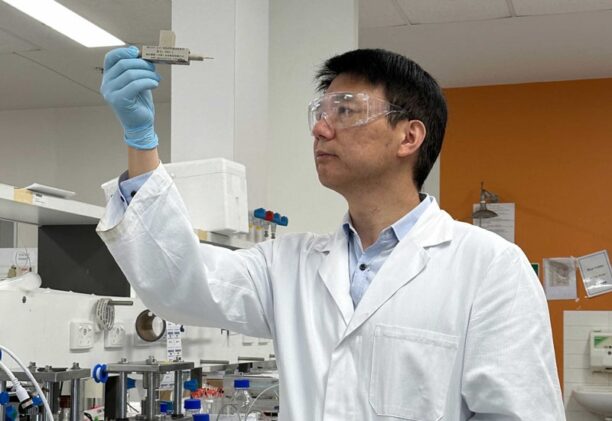
Australian researchers have developed a groundbreaking rechargeable proton battery that maintains efficiency even in freezing conditions. Central to this innovation is tetraaminobenzoquinone (TABQ), a modified organic compound derived from tetrachlorobenzoquinone (TCBQ). While TCBQ’s lightweight structure makes it promising, its limited redox potential has restricted its use—until now. By replacing chlorine groups with amino groups, scientists enhanced TCBQ into TABQ, greatly improving the anode’s proton storage capacity and redox performance.
Protons, the smallest and most mobile positively charged particles, offer immense potential for next-generation battery technologies. TABQ provides a more negative anode potential, enabling efficient electron transfer and allowing the battery to function across a wide temperature range.
Tests of the proton battery prototype revealed exceptional durability, sustaining over 3,500 full charge-discharge cycles. This achievement marks a significant step toward the development of robust, cold-resistant batteries tailored for extreme climates.
#space #science #educational #technology